In today’s fiercely competitive market, establishing a distinct and consistent brand identity is not merely beneficial—it’s essential. Whether you’re launching a startup or managing an established business, creating comprehensive brand guidelines is crucial for ensuring that your brand is represented consistently and accurately across all platforms. These guidelines serve as the foundation of your brand’s identity, informing every aspect of how your brand is perceived by the public. This detailed guide will help you craft brand guidelines that not only reflect your brand’s values but also position it for long-term success. By integrating insights from branding literature and real-world examples, we will explore how to create brand guidelines that can withstand the test of time and adapt to the evolving market landscape.
The Role of Brand Equity in Business Growth
According to David A. Aaker, a pioneer in branding theory, brand equity is built on four pillars: brand awareness, brand associations, perceived quality, and brand loyalty. Your brand guidelines play a critical role in establishing and maintaining these pillars by ensuring that your brand is communicated consistently across all touchpoints. Brand equity contributes to customer loyalty, allowing your brand to command premium pricing and maintain a competitive edge in the market.

Logo Usage: Define How To Display Logos
Your logo is the most recognisable element of your brand, making it essential to define its usage with precision. Establish rules for color variations, minimum size requirements, and clear space around the logo to ensure it maintains its integrity and impact across all mediums. Whether your logo appears on digital platforms, printed materials, or merchandise, it should always look the same.
Research by Alina Wheeler, author of Designing Brand Identity, emphasises the importance of logo consistency in building brand recognition. A logo that is used inconsistently can confuse your audience and dilute your brand’s message. Therefore, your guidelines should include clear instructions on how your logo should be used in various contexts, including variations for different backgrounds, monochrome versions, and restrictions on how the logo should not be used.
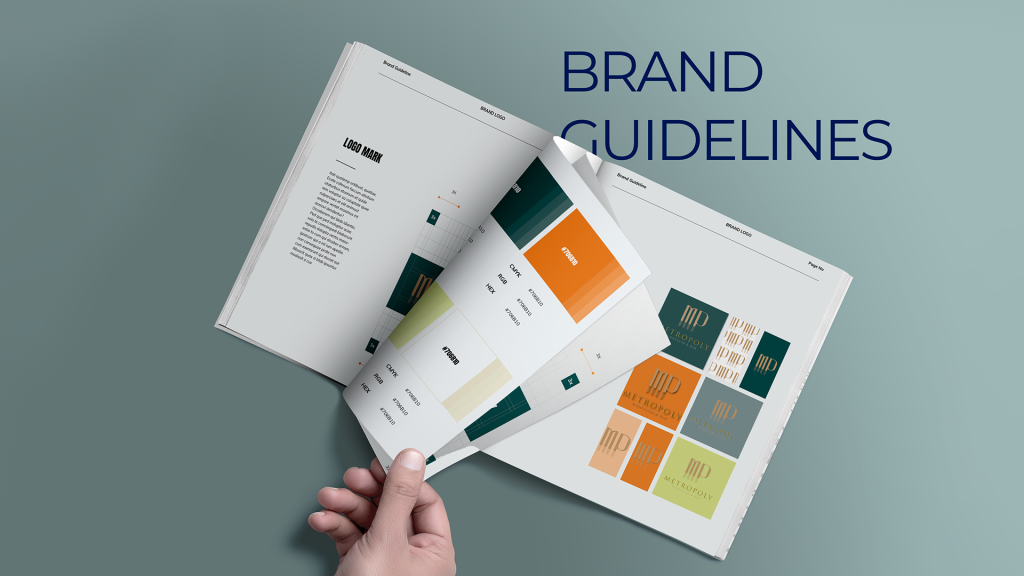
Your brand’s color palette is more than just a visual choice; it’s a strategic tool that influences consumer perception. Studies have shown that color increases brand recognition by up to 80%. Your guidelines should specify primary and secondary colors, along with their HEX, RGB, and CMYK codes to ensure accurate reproduction across all media.
A well-defined color palette not only reinforces brand recognition but also evokes specific emotional responses from your audience. For example, blue is often associated with trust and reliability, making it a popular choice for financial institutions. On the other hand, vibrant colors like red and orange can evoke excitement and energy, making them ideal for brands in the entertainment or food industries. By consistently using your brand colors across all touchpoints—from business cards to large-scale banners—you create a cohesive visual identity that resonates with your audience.

Typography
Typography plays a crucial role in conveying your brand’s tone and personality. It’s not just about choosing a font; it’s about choosing the right font that reflects your brand’s identity. Specify fonts for different purposes—headlines, body text, captions, etc.—and provide guidelines on size, weight, and line spacing.
Typography is a powerful tool for creating a distinct brand voice. For example, a luxury brand might use elegant serif fonts to convey sophistication, while a tech startup might opt for clean, modern sans-serif fonts to communicate innovation and simplicity. The choice of typography can also affect readability and user experience. By specifying the correct usage of fonts in your brand guidelines, you ensure that your brand’s voice is consistent across all platforms.

Imagery and Graphics
Images and graphics are powerful tools for communicating complex messages quickly and effectively. Define the style of imagery that best represents your brand—whether it’s minimalistic, vibrant, professional, or playful. Consistent use of imagery across your marketing materials will create a cohesive visual experience that resonates with your audience.
In branding literature, visual storytelling is emphasised as a key component of brand communication. Your choice of imagery should support your brand’s narrative, creating a visual connection with your audience that goes beyond words. Whether you’re using photographs, illustrations, or icons, your imagery should always align with your brand’s values and personality. Consider guidelines on the types of images to use, the tone they should convey, and how they should be integrated into your layouts.
Tone of Voice
Your brand’s tone of voice is how you communicate with your audience. It encompasses the language, style, and personality of your communication. Whether your tone is formal, friendly, or humorous, it should be consistent across all platforms.
Establish clear guidelines for different types of content—social media, emails, blogs, etc.—to ensure your brand speaks with one voice. This consistency helps build trust and credibility with your audience, as they know what to expect from your brand. According to branding expert Marty Neumeier, consistency in tone of voice is crucial for building a strong brand that resonates with its audience.
Brand Narrative
The narrative is the story your brand tells, both implicitly and explicitly. Your brand guidelines should include a section dedicated to this narrative, outlining the key messages that should be conveyed in all communications. This narrative might include your brand’s origin story, its mission and vision, and the key messages that differentiate it from competitors.
A compelling brand narrative not only captures the essence of your brand but also resonates emotionally with your audience. It’s about more than just selling a product or service; it’s about creating a connection with your customers that goes beyond the transactional. Your brand guidelines should outline how this narrative is woven into every piece of communication, from social media posts to customer service interactions.
Brand Applications
Brand guidelines aren’t just theoretical; they should be applied practically across all platforms and touchpoints. This section of your brand guidelines should provide examples of how your brand elements come together in different contexts, such as website design, social media, email marketing, print materials, and packaging. Each application should adhere to the standards outlined in your guidelines, ensuring that your brand is consistently represented across all mediums.

Practical Tips for Implementing Brand Guidelines
Creating brand guidelines should be a collaborative process. Involve key stakeholders who have a deep understanding of your brand’s vision and goals. Their insights will ensure that the guidelines reflect the brand’s core values and strategic direction. Stakeholders might include marketing teams, designers, copywriters, and even customer service representatives who interact with your audience on a daily basis.
Plus, Use Real-World Examples
Illustrate how your brand guidelines should be applied by providing real-world examples. This makes the guidelines more practical and easier to follow, serving as a reference for your team. For example, you could include examples of how your logo should appear on different types of materials, such as business cards, websites, and promotional products.
While consistency is crucial, it’s also important to allow for flexibility. Your brand guidelines should evolve as your brand grows and market conditions change. This flexibility will ensure that your brand remains relevant and innovative. Regularly review and update your brand guidelines to reflect changes in the market, technology, and consumer preferences.


Bringing Your Brand Guidelines to Life with AAC
Once your brand guidelines are established, it’s time to put them into action. At AAC, we offer a wide range of print and ID solutions that can bring your brand to life. From custom signage to branded apparel, our products are designed to align with your brand’s identity and help you make a lasting impression.
Custom Signage and Print Marketing Solutions
Signage is one of the most visible forms of brand communication, making it essential to ensure that your signs accurately reflect your brand’s identity.
At AAC, we offer a range of custom signage options, from large-format prints to intricate die-cut signs, all produced with the highest quality materials. Our PrintFlo design tool allows you to customise every aspect of your signage, ensuring that it aligns with your brand guidelines.
In addition to signage, we offer a comprehensive suite of print marketing solutions, including brochures, business cards, flyers, and more. Each product is designed to enhance your brand’s visibility and leave a lasting impression on your audience.
Our PrintFlo design tool is an integral part of maintaining brand consistency across all your printed materials. With PrintFlo, you can upload your brand guidelines, including logo files, color codes, and typography specifications, directly into the platform. This ensures that every product you design adheres to your brand standards, reducing the risk of inconsistencies that could dilute your brand’s message.


The Role of Brand Guidelines in Building Brand Equity
Brand equity refers to the value that a brand adds to a product or service beyond its functional benefits. Strong brand guidelines play a crucial role in building and maintaining brand equity by ensuring that your brand is communicated consistently across all touchpoints.
Strong brand guidelines are pivotal in building and maintaining brand equity by ensuring consistency in your brand’s messaging and visual identity. According to David A. Aaker, brand equity is built on four pillars: brand awareness, brand associations, perceived quality, and brand loyalty. Your guidelines help to solidify these pillars by ensuring that every interaction with your brand—whether it’s through advertising, product design, customer service, or social media—reflects the same core values and personality.

Understanding Brand Awareness
Brand awareness is the extent to which consumers are familiar with your brand and can recall it when needed. A critical part of building brand awareness is maintaining consistent visual and verbal messaging across all platforms. When your brand’s colors, logos, and tone of voice are used consistently, it makes your brand more recognisable and easier to remember. This is particularly important in competitive markets, where consumers are bombarded with countless brand messages daily.
By creating detailed brand guidelines, you ensure that all marketing materials—whether they are created in-house or by external agencies—adhere to the same standards. This consistency helps to build a strong, memorable brand that stands out in the minds of consumers.
Brand Associations

Brand associations are the mental connections that consumers make between your brand and certain attributes, emotions, or qualities. These associations can be positive or negative and play a crucial role in shaping consumers’ perceptions of your brand. For example, a brand that consistently uses eco-friendly materials in its products and highlights this in its messaging is likely to be associated with sustainability and environmental responsibility.
Your brand guidelines should include not only the visual and verbal elements of your brand but also the core values and messages that you want to convey. By clearly defining what your brand stands for, you can ensure that all communications reinforce the associations that you want consumers to make with your brand.
Perceived Quality
Perceived quality refers to consumers’ perceptions of the quality of your products or services, which can significantly influence their purchasing decisions. Strong brand guidelines help to establish and maintain a perception of high quality by ensuring that all brand elements are polished, professional, and aligned with your brand’s positioning.
For example, consistent use of high-quality imagery, sophisticated typography, and a well-defined color palette can convey a sense of luxury and exclusivity. On the other hand, a playful color scheme and casual tone of voice might suggest a brand that is approachable and fun. By clearly defining the visual and verbal elements of your brand, you can shape consumers’ perceptions of your products and services, helping to build a reputation for quality.
Brand Loyalty
Brand loyalty is the extent to which consumers are committed to your brand and are likely to continue purchasing your products or services in the future. Building brand loyalty requires not only delivering high-quality products and services but also creating a consistent and positive brand experience across all touchpoints.
Your brand guidelines play a crucial role in building brand loyalty by ensuring that all interactions with your brand are consistent and aligned with your brand’s values. This consistency helps to build trust and credibility with consumers, which are key drivers of brand loyalty. When consumers know what to expect from your brand and have positive experiences with it, they are more likely to remain loyal and continue to choose your brand over competitors.
Putting Your Brand Guidelines To Work With AAC
Once you have established your brand guidelines, the next step is to implement them across all your marketing materials. At AAC, we offer a wide range of print and ID solutions that can help you bring your brand guidelines to life. Whether you need custom signage, branded apparel, or personalised ID cards, we have the products and expertise to help you create a consistent and cohesive brand experience.
Our PrintFlo design tool makes it easy to apply your brand guidelines to all your printed materials. With PrintFlo, you can upload your brand assets, such as logos, color codes, and typography, and use them to create custom designs that are fully aligned with your brand guidelines. Whether you’re designing business cards, brochures, or banners, PrintFlo ensures that your brand is represented consistently and professionally.
Conclusion: The Lasting Impact of Strong Brand Guidelines
In conclusion, brand guidelines are not just a set of rules—they are the foundation of your brand’s identity and a key driver of your brand’s success. By creating comprehensive brand guidelines, you ensure that your brand is represented consistently and professionally across all platforms, helping to build brand equity, foster customer loyalty, and position your brand for long-term success.
At AAC, we are committed to helping you bring your brand to life with high-quality print and ID solutions. Whether you need custom signage, branded apparel, or personalised ID cards, we have the products and expertise to help you create a consistent and cohesive brand experience.
With our PrintFlo design tool, you can easily apply your brand guidelines to all your printed materials, ensuring that your brand is represented consistently and professionally. Visit our website today to learn more about our products and services, and start bringing your brand guidelines to life.